 admin
admin How to Care for Epiphytic Bladderwort in Windy Areas: A Plant Lover’s Survival Guide
I love the quirky, almost alien beauty of epiphytic bladderworts. Their tiny, intricate leaves and the fascinating hidden bladders that trap microorganisms make them a captivating addition to any collection. But when I moved my plants to a breezier balcony, I quickly faced a crisis. My Utricularia began to look stressed, dried out, and utterly unhappy. I realized that caring for these delicate epiphytes in windy conditions isn’t just about watering; it’s about creating a stable microclimate. If you’re struggling with how to care for epiphytic bladderwort in windy areas, you’re not alone. I spent two intensive weeks experimenting, observing, and problem-solving to find a reliable method. This guide is the result of that hands-on experience, complete with my mistakes and the solutions that finally worked.
Understanding the Windy Challenge for Epiphytic Bladderworts
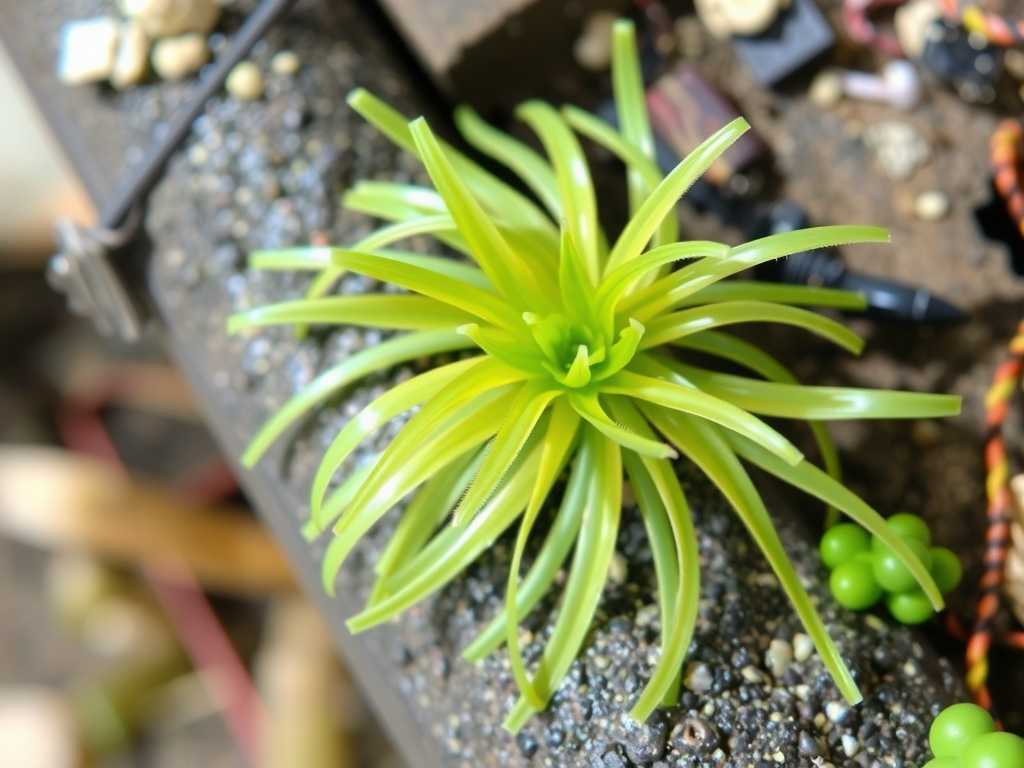
Epiphytic bladderworts, primarily from the Utricularia genus, are adapted to humid, sheltered environments in tree canopies. Wind is their natural enemy in cultivation. It accelerates moisture loss from their fine, often moss-like foliage and the substrate they grow on. This constant drying effect can lead to dehydration, stalled growth, and in severe cases, plant death. The key to success is not fighting the wind directly but strategically mitigating its impacts. My goal was to maintain the high humidity and consistent moisture these plants crave, even in a constant breeze.
My Two-Week Experiment: Step-by-Step Adaptation Process
I selected a Utricularia alpina and a Utricularia quelchii for this trial, both mounted on small cork bark slabs with a minimal pad of sphagnum moss. They were placed on a shelf that received consistent, moderate wind for most of the day.
Week 1: Initial Setup and Immediate Problems
My first approach was simplistic. I thought simply increasing watering frequency would suffice.
-
Step 1: Increased Misting. I began misting the plants and their mounts 3-4 times daily.
-
Observation (Days 1-3): While the plants looked damp briefly, they dried out completely within an hour. The wind was evaporating the water far too quickly. The U. alpina tips started browning.
-
The "Aha" Moment & Solution: Pure misting was a losing battle. I needed to reduce wind speed at the plant level. I created a simple windbreak by attaching a transparent, perforated acrylic sheet to the windward side of the shelf. This didn’t eliminate airflow but diffused and slowed it significantly. According to principles often cited by horticultural societies like the American Horticultural Society (AHS), good air circulation prevents disease, but excessive wind causes transpiration stress. My makeshift windbreak aimed for that balance.
-
Step 2: Substrate and Mounting Reevaluation. I checked the mounts. The thin layer of sphagnum was bone dry deep down.
-
Observation (Days 4-7): Even with the windbreak, daily soaking was necessary. I realized the cork bark alone had no water retention.
-
Solution: I carefully remounted both plants. This time, I used a thicker pad of long-fibered sphagnum moss and wrapped it securely with a fine, biodegradable mesh (like a small onion bag) before attaching it to the cork with fishing line. This created a deeper, more moisture-retentive reservoir that wouldn’t blow away.
Week 2: Refinement and Success
With the windbreak and better mounts in place, I refined the care routine.
- Step 3: The Soaking Method. Instead of misting, I adopted a deep-soak routine. Once daily, around midday, I would take the entire mounted plant and submerge it in distilled water for 15-20 minutes.
- Observation (Days 8-14): This was the game-changer. The sphagnum core would become fully saturated, providing slow-release moisture throughout the rest of the day and night. The plants visibly perked up. New, healthy green growth was evident on the U. quelchii by day 12.
- Step 4: Humidity Microclimate. For an extra boost, I placed a shallow water tray with pebbles beneath the plant shelf (not directly under the mounts to avoid sogginess). As water evaporated, it slightly increased local humidity around the plants, further countering the drying effect of the residual air movement.
Key Strategies for Windy Area Care
Based on my two-week trial, here are the non-negotiable strategies for growing Utricularia in windy conditions.
Create a Physical Windbreak A partial barrier is essential. This can be a perforated screen, a row of taller, wind-tolerant plants, or even a strategically placed piece of furniture. The goal is to reduce direct, harsh wind without creating a stagnant air pocket. Stagnant air can invite fungal issues, something the Royal Horticultural Society (RHS) consistently warns against for humidity-loving plants. My clear acrylic sheet worked perfectly, allowing light in while taming the breeze.
Optimize Mounting for Moisture Retention Choosing the right mount is critical for epiphytic plant care in exposed locations. Cork bark is excellent for attachment but terrible for retention. The solution is a generous, secure pad of moisture-retentive material.
- Material: Long-fibered sphagnum moss is ideal. It holds many times its weight in water and wicks moisture evenly.
- Technique: Form a dense, golf-ball-sized core of moist sphagnum around the plant’s roots. Encase it loosely in plastic mesh to hold it together, then attach the entire bundle firmly to your mount. This "moss ball" acts as a slow-release water reservoir.
Implement a Soaking Hydration Routine Forget frequent, superficial misting. It’s inefficient and can leave mineral deposits on leaves. The deep-soak method ensures the root zone and moss core are thoroughly hydrated.
- Use distilled, rainwater, or reverse osmosis water.
- Submerge the entire mount in a container for 15-30 minutes.
- Remove, let excess water drain completely, and hang back in place.
- Perform this once a day in very windy, dry conditions. Observe your plants and adjust frequency based on how quickly the moss core dries.
Monitor and Adapt Your care for bladderworts in breezy spots isn’t set in stone. Feel the moss core daily. If it’s still damp below the surface by the next scheduled soak, you can skip a day. Look for signs of health: firm, brightly colored leaves and new growth. Wrinkling, browning, or shriveled leaves signal dehydration.
Common Pitfalls I Encountered (And How to Fix Them)
- Pitfall 1: Relying Only on Misting. As I learned, this is futile in wind. The fix was switching to the soak method.
- Pitfall 2: Using a Non-Porous Mount Alone. Bare cork or driftwood dries out instantly. The fix was adding the substantial sphagnum moss buffer.
- Pitfall 3: Creating a Full Seal. I initially tried a mini greenhouse cover, which caused condensation and poor air flow. The fix was the perforated windbreak, which reduced wind speed while maintaining fresh air circulation—a balance crucial for preventing rot, as emphasized in many AHS resources on epiphyte care.
Frequently Asked Questions
Can I grow epiphytic bladderworts indoors in a windy window? Absolutely, and it’s often easier. The same principles apply. Use a humidity tray and consider a small room humidifier if the indoor air is dry from heating or cooling. The wind from a window might be less consistent than outdoors, but the soaking method remains your best hydration tool.
What type of water should I use for soaking? Always use pure water. Tap water contains minerals that will quickly build up in the sphagnum moss, potentially harming the sensitive roots of the bladderwort. Distilled water, rainwater, or water from a reverse osmosis filter is mandatory for long-term health.
My mounted bladderwort still dries out too fast even with daily soaks. What now? Your moss pad might be too small or the wind too strong. First, try adding more sphagnum moss to the mount during the next remounting. If that’s not enough, you may need to reposition your windbreak to provide more shelter or move the plant to a slightly less exposed location that still receives adequate light.
Caring for epiphytic bladderworts in the wind is a rewarding challenge that forces you to understand their needs on a deeper level. It’s not about coddling them in a still, closed environment, but about intelligently managing the conditions around them. By focusing on wind protection, superior mounting, and deep-soak hydration, you can replicate the humid, secure pockets of the forest canopy they call home. My plants are now thriving on that balcony, putting out new growth and even the occasional flower spike, proving that with the right adjustments, these delicate wonders can weather the breeze.

发表评论