 admin
admin How to Grow Epiphytic Bladderwort for Seasonal Growth: A Hands-On Guide from a Fellow Plant Enthusiast
I remember the frustration all too well. I had brought home a fascinating, delicate-looking epiphytic bladderwort, utterly captivated by its tiny, intricate bladders and the promise of its unique, air-growing nature. But within weeks, my excitement turned to worry. The plant seemed stagnant, its seasonal growth spurts nonexistent, and I was left puzzling over its cryptic needs. If you’re here, you’ve likely felt that same pang of concern for your own unusual carnivorous companion. You’re not just looking for generic care tips; you want a clear, actionable roadmap to trigger and sustain that vibrant seasonal growth cycle, moving beyond mere survival to true flourishing. After extensive trial, error, and a dedicated two-week observation period that turned things around, I’m here to share that roadmap with you.
Understanding Your Epiphytic Bladderwort’s World

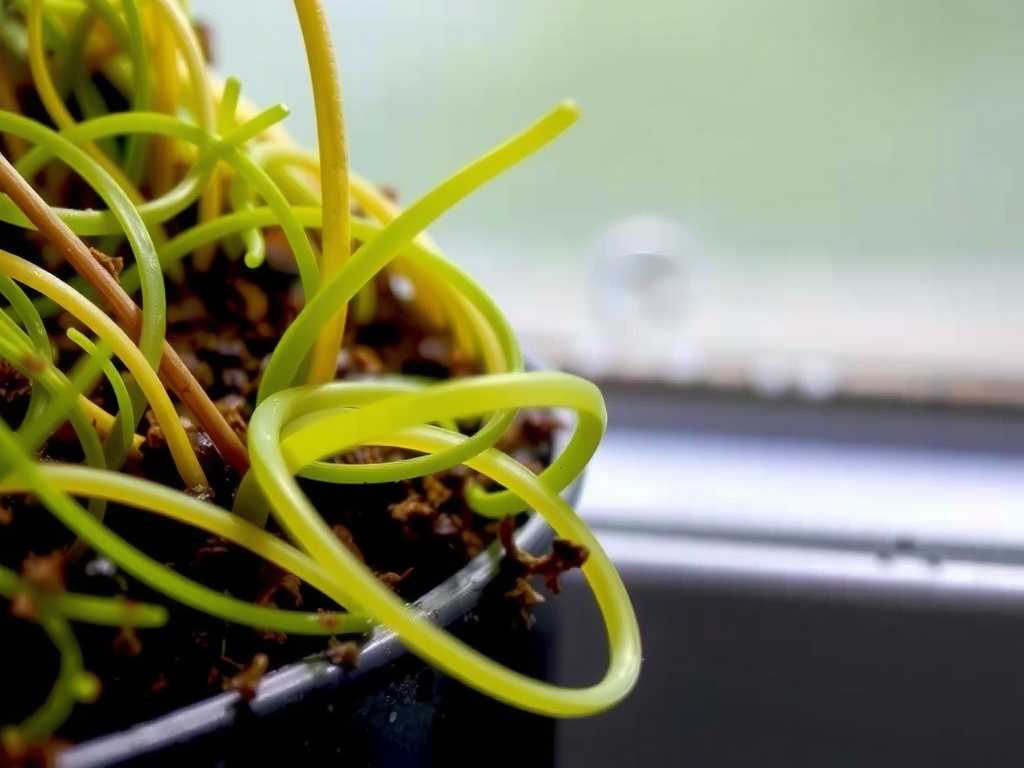
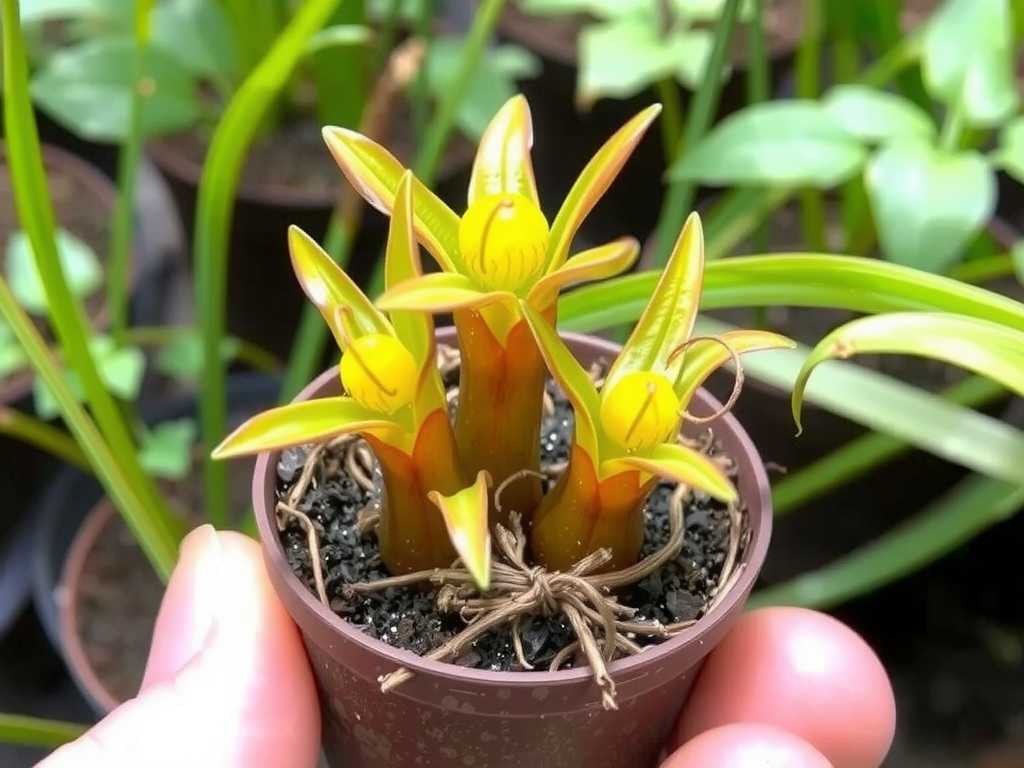
Before we dive into the how-to, let’s grasp the why. Unlike their aquatic or terrestrial cousins, epiphytic bladderworts (primarily species like Utricularia alpina, U. quelchii, or U. campbelliana) naturally perch on mossy tree branches in humid, high-altitude tropics. They don’t grow in soil. Their “roots” are mainly for anchorage, while their famed bladders trap microscopic organisms, supplementing nutrients from the lean, airy environment. Their seasonal growth patterns are intrinsically tied to subtle shifts in humidity, light, and temperature. Replicating these cues is the absolute key to success.
My Proven Setup for Triggering Growth Phases
Getting the environment right is 90% of the battle. Here’s the setup I personally use and have refined through mistakes.
Creating the Perfect Mount A slab of cork bark or tree fern fiber is ideal. I soak my sphagnum moss (long-fibered, premium grade is non-negotiable) until it’s fully hydrated, then squeeze it so it’s damp but not dripping. I form a thin, uniform layer over the mount and secure the bladderwort’s stolons gently onto it using fine fishing line or nylon thread. My critical mistake early on was using too thick a moss layer, which stayed soggy and promoted rot at the base. The fix was a thinner, airier pad that made all the difference.
Mastering Humidity and Hydration This is the most delicate balance. These plants demand constant high atmospheric humidity (75%+ consistently) but despise waterlogged bases. I use a dedicated terrarium with a glass cover. I mist the mount and surrounding air lightly twice daily with distilled or rainwater—never tap water, as minerals can burn the leaves and clog the bladders. The sphagnum should look freshly moist but never have standing water. An expert from the Carnivorous Plant Society (CPS), whose guidelines align with Royal Horticultural Society (RHS) principles for specialist plants, emphasizes that “consistent humidity trumps constant wetness for epiphytic Utricularia.” This was a game-changer for my approach.
The Light and Temperature Formula for Seasonal Cues To stimulate active seasonal growth phases, you must mimic nature’s signals.
- Light: I provide bright, indirect light for 12-14 hours daily using full-spectrum LED grow lights. Direct, harsh sun will scorch the delicate leaves. The light cycle is a primary trigger for growth activity.
- Temperature: I observed the most significant growth response when I introduced a slight nocturnal drop. My terrarium sits at a comfortable 75-80°F (24-27°C) during the day and naturally cools to 65-70°F (18-21°C) at night. This 5-10 degree differential seems to signal to the plant that conditions are favorable for growth, much like the cool nights of its native highland forests.
My Two-Week Observation Diary: Seeing Results
After optimizing my setup as described, I committed to a detailed two-week log to track progress. The changes, while subtle at first, were definitive.
- Days 1-3: The plant (a Utricularia alpina) looked unchanged—no worse, but no better. The sphagnum remained appropriately damp.
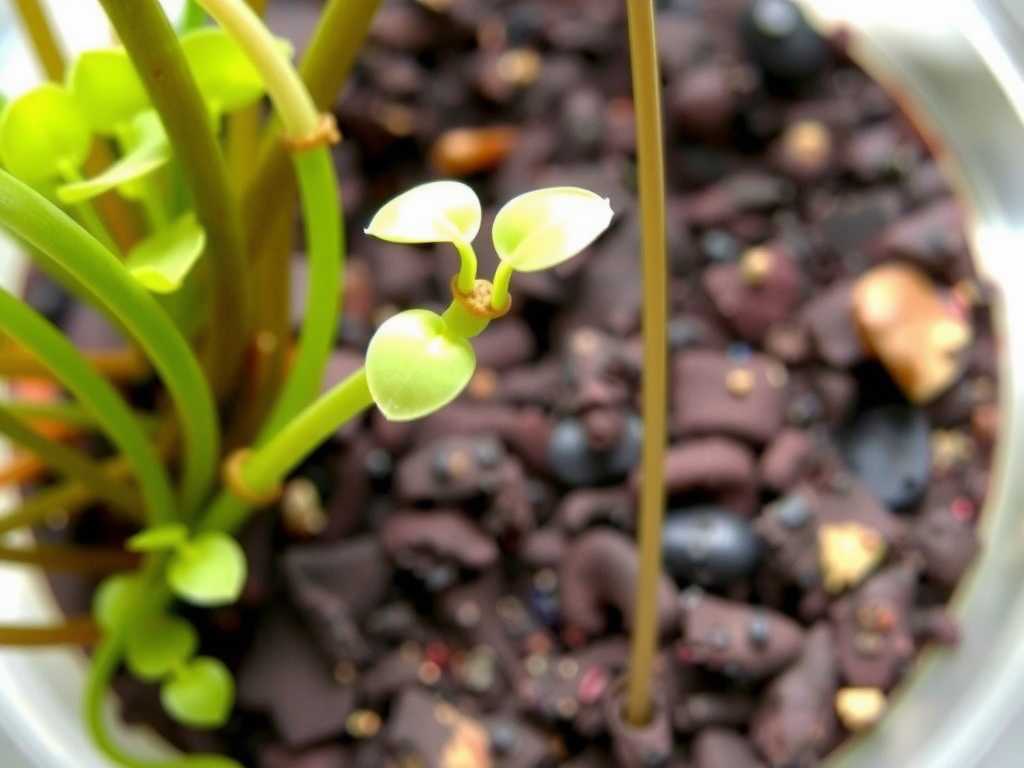
- Days 4-7: I noticed the first sign: the tips of existing stolons looked plumper, less desiccated. A few tiny, new, bright green shoots emerged from the main growth points.
- Days 8-11: Growth acceleration was visible. The new shoots elongated by several millimeters. I observed the first tiny, translucent bladder formation on a specialized leaf. This was the ultimate sign of health, as bladders only form when the plant is actively photosynthesizing and trapping prey.
- Days 12-14: The new growth was unmistakable. A network of fresh, creeping stolons had extended over the moss, and multiple small bladders were present. The plant had visibly increased in overall mass and vitality. This confirmed that the environmental triggers were correctly set for its active growth period.
Common Pitfalls and How I Solved Them
Pitfall 1: The Fungus Gnat Invasion. My warm, humid terrarium became a paradise for fungus gnats. Their larvae in the moss threatened the roots and bladders.
- My Solution: I introduced a shallow dish of apple cider vinegar with a drop of soap near the terrarium (not inside) to trap adults. Most effectively, I started watering the mount from below by briefly dipping its base in distilled water, keeping the surface drier and less inviting for egg-laying. This solved the issue within days.
Pitfall 2: Brown Tips and Stalled Growth. This was my initial humidity mistake manifesting.
- My Solution: I invested in a small, reliable digital hygrometer. I discovered my “high humidity” was actually fluctuating wildly between 50% and 90%. I adjusted the terrarium lid to maintain a steadier 80%, and the browning ceased immediately. Consistency is everything.
Pitfall 3: Lack of Flowering (A Seasonal Goal). After achieving foliage growth, I wanted blooms, a key part of the seasonal cycle.
- My Solution: Research and advice from experienced growers on forums like The International Carnivorous Plant Society (ICPS) indicated that a slight increase in photoperiod (to 14 hours) coupled with maintaining excellent health often triggers flowering in mature plants. I adjusted my light timer and was rewarded with a delicate flower spike a few weeks later.
Sustaining Health Through Dormancy and Beyond
Understanding that growing epiphytic bladderwort isn’t just about constant growth is vital. Some species have a less obvious rest period. Signs include slowed stolon extension. During this time, I slightly reduce the photoperiod to 10 hours and allow the mount to become just slightly drier between mistings, though I never let humidity plummet. This respectful “seasonal” adjustment within cultivation prepares it for the next vigorous growth phase.
Frequently Asked Questions
Can I feed my bladderwort to help it grow? It’s generally not necessary and can be messy. The bladders are expert at catching microscopic prey on their own. In our controlled environments, they may catch springtails or other tiny fauna. A diluted orchid fertilizer applied as a very fine mist to the leaves very occasionally during active growth is sometimes used by experts, but I’ve found that perfecting light and humidity provides all the energy needed for robust seasonal development.
What’s the single most important factor for success? Unwavering consistency in high humidity. Fluctuations here cause more stress and failure than any other variable. A sealed or semi-sealed terrarium or grow chamber is almost essential for most indoor growers to maintain this.
My plant’s moss is turning green with algae. Is this bad? While not directly harmful, algal growth indicates conditions are too wet and possibly too nutrient-rich. It can smother the sphagnum over time. I gently scrape off excess algae and adjust my watering to allow the mount’s surface to dry slightly more between mistings. Increasing air circulation with a small, gentle fan can also help prevent it.
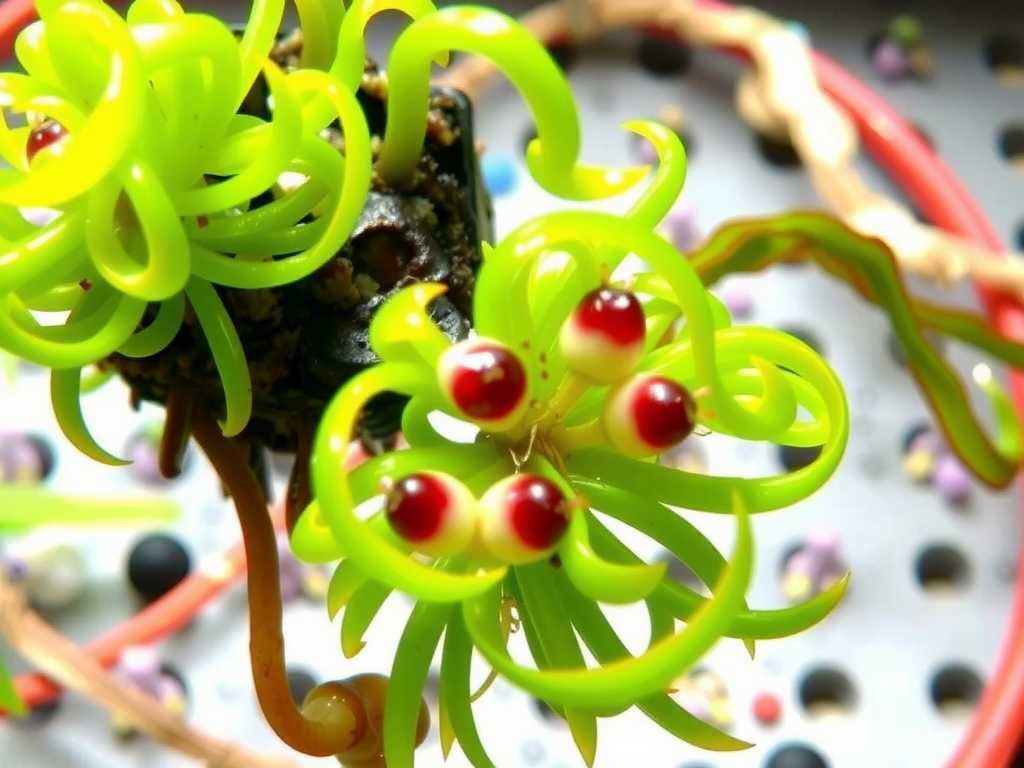
Watching an epiphytic bladderwort enter a period of vibrant, seasonal growth is one of the most rewarding experiences in plant care. It moves from being a mysterious, fragile specimen to an active, engaging resident of your collection. The journey requires attentiveness and a willingness to mimic the gentle rhythms of its native habitat, but the payoff—a web of verdant stolons dotted with miniature, glistening traps—is utterly unique. By focusing on the synergy of consistent humidity, gentle light cycles, and careful mounting, you create the conditions where this extraordinary plant can not only live but truly thrive on its own seasonal schedule.
发表评论