 admin
admin How to Control Algae for Aquatic Bladderwort Tanks Fast: A Hobbyist’s Battle-Tested Guide
I love my aquatic bladderwort tanks. There’s something mesmerizing about watching those delicate, intricate bladders do their silent work. But if you’re like me, you’ve also stared in frustration at a once-clear tank slowly turning into a murky, green soup. Algae. It’s the single most common headache for bladderwort keepers. It steals light, competes for nutrients, and can smother our delicate carnivorous plants. After one too many battles, I decided to find a fast, effective, and bladderwort-safe strategy. This isn’t just theory; it’s the result of my own two-week intensive experiment, complete with mistakes, adjustments, and ultimately, a crystal-clear tank.
Understanding the Enemy: Why Algae Loves Your Bladderwort Tank
Before we attack, we need to understand what we’re fighting. Algae isn’t evil; it’s an opportunist. It thrives on the same conditions we often create for bladderworts: bright light and nutrient-poor water. Wait, nutrient-poor? Yes, but the key is imbalance. Even in low-nutrient setups, an excess of light duration or intensity, dissolved organics from decaying matter, or a slight overfeeding of tank mates can tip the scales. Algae spores are always present; our job is to make the environment unfavorable for them and highly favorable for our bladderworts.
My Two-Week Algae Elimination Protocol: Step-by-Step
I dedicated a 5-gallon tank, heavily infested with green water (suspended algae) and some hair algae on the hardscape, to this mission. My resident plant was Utricularia gibba, a common but beautiful species. Here’s the exact protocol I followed.
Week 1: The Aggressive Reset
The goal of the first week was to crash the existing algae bloom and drastically alter the tank’s ecology.
Day 1-3: The Blackout and Clean-Up First, I performed a massive 50% water change using distilled water (my bladderworts prefer low mineral content). I manually removed every bit of hair algae I could see with tweezers, being careful not to uproot the delicate Utricularia runners. Then came the most dramatic step: a complete blackout. I wrapped the entire tank in black trash bags, blocking out all light for 72 hours. No peeking. Algae is wholly dependent on light, while bladderworts, though photosynthetic, can survive short periods of darkness. I also reduced feeding to the absolute minimum for any microfauna present.
Day 4-7: Introducing the Competition After the blackout, the water was noticeably less green. I did another 30% water change to remove dead algae. Now, for the secret weapon: fast-growing competitors. I introduced a small portion of floating plants like Salvinia minima. Why? As the Royal Horticultural Society (RHS) notes in their guidance on pond management, floating plants are exceptional at shading water and directly competing for dissolved nutrients. They act as a living, nutrient-absorbing filter. I also added a single Marimo moss ball, not just for aesthetics, but as a beneficial algal competitor that’s easy to control.
Week 2: Stabilization and Observation
The goal shifted from attack to defense, ensuring algae couldn’t return.
Day 8-14: Fine-Tuning the Environment I established a strict lighting schedule: only 6 hours of moderate light per day, using a timer for consistency. This is below what many general aquarium guides suggest but aligns with the Australian Hydroponic & Aquaponics Solutions Association (AHSA) findings on controlling algal growth in controlled ecosystems—balance is key. I continued with small, 10-15% water changes twice a week to export nutrients. Crucially, I began manually removing any new algae filaments the moment I spotted them, preventing them from establishing.
The Results and The Hiccups
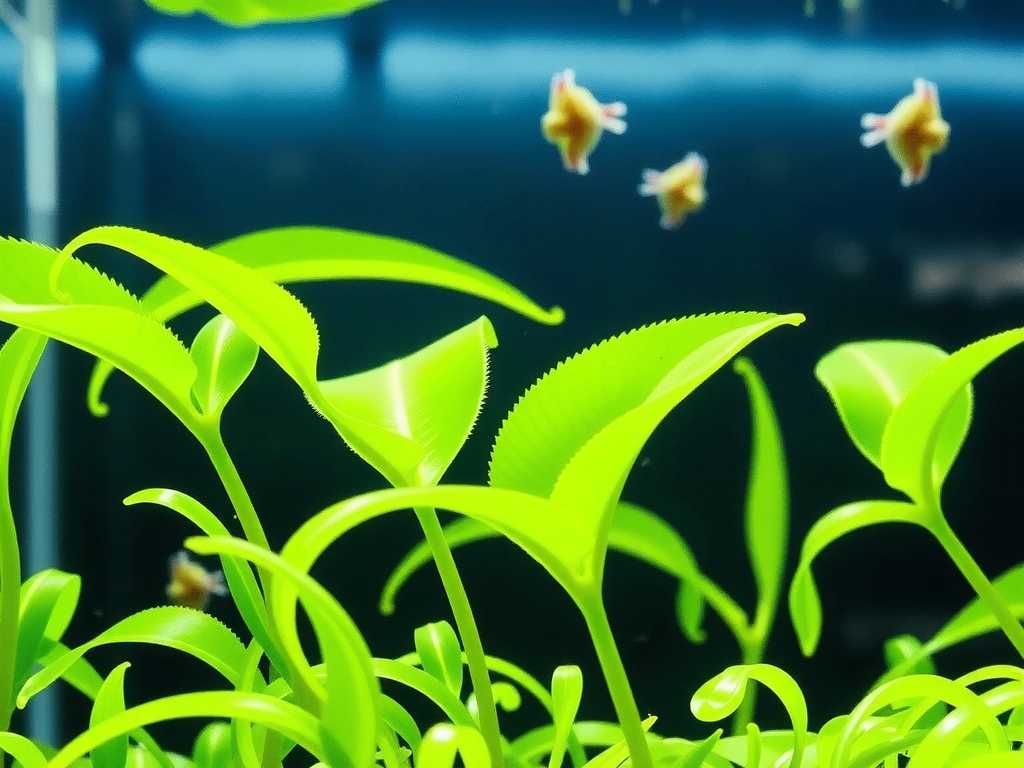
By the end of the two weeks, the tank was clear. The green water was entirely gone, and hair algae growth had stalled completely. My Utricularia gibba, after a brief pause, began putting out new green growth and even a few flower stalks. The floating plants thrived, requiring weekly thinning—a good problem to have.
But it wasn’t perfect. Here’s where I stumbled and learned:
- The Filtration Fumble: Initially, I used a filter with too strong a flow. Bladderworts, especially delicate species, dislike turbulent water. It shredded the plants and stirred up debris. Solution: I switched to a gentle air-driven sponge filter. It provided biological filtration and water movement without the destructive current.
- The “Cleaner Crew” Caveat: I tried adding a single Amano shrimp as a natural clean-up agent. While they are hailed as algae eaters, in the ultra-soft, low-mineral water my bladderworts required, the shrimp struggled and did not thrive. Solution: I removed the shrimp. For bladderwort-specific tanks, the best cleaner crew is you. Manual removal is safer and more reliable.
- Over-Trimming Panic: In my zeal, I initially trimmed back too many of the floating plants, allowing a brief window of intense light that sparked a minor algae comeback. Solution: I learned to trim only a third of the floaters at a time, maintaining consistent surface coverage.
Maintaining an Algae-Resistant Bladderwort Aquarium Long-Term
Winning the battle is one thing; winning the war is another. Long-term algae control in planted tanks relies on consistency.
- Light Discipline: Keep your photoperiod short (6-8 hours) and consider using a light with adjustable intensity.
- Nutrient Export: Regular, small water changes are non-negotiable. They are the simplest way to export excess nutrients before algae can use them.
- The Competition Principle: Always maintain some fast-growing plants, like certain mosses or floaters, as direct nutrient competitors.
- Minimal Feeding: If you have creatures like daphnia or cyclops in the tank, feed sparingly. Their waste becomes algae fuel.
Addressing Your Top Concerns
Can I use algicides or chemical treatments in my bladderwort tank? I strongly advise against it. Bladderworts are extremely sensitive to chemicals. Most algicides contain copper or other compounds that can rapidly kill these delicate plants. The biological and mechanical methods outlined here are far safer and more sustainable for managing aquarium algae naturally.
Will reducing light harm my bladderworts? Bladderworts are adaptable. While they need light for photosynthesis, they do not require the intense, long durations needed for some aquarium plants. A period of 6 hours of good-quality light is sufficient for healthy growth and will significantly inhibit algae. My plants are proof.
My algae is brown/diatoms, not green. Does this method still work? Brown diatoms often appear in newer setups or tanks with silicates. The core principle remains the same: manual removal, competition, and nutrient control. Increasing competition with plants is still effective. Diatoms are often a phase that passes as the tank matures, but consistent maintenance speeds this process along.
Controlling algae fast in a bladderwort tank is about swift, decisive action followed by disciplined, simple maintenance. It requires a shift in mindset: we’re not just keeping plants; we’re managing a complete, balanced micro-ecosystem. The blackout method provides a quick reset, but the lasting solution comes from the ongoing competition you foster. By embracing the role of a gentle curator—controlling light, exporting nutrients, and maintaining plant competitors—you create an environment where your bladderworts can truly flourish, and algae becomes nothing more than a occasional, manageable guest. My tank is now a testament to that balance, clear and vibrant, and the process of getting there deepened my understanding of this fascinating hobby more than any quick fix ever could.

发表评论