 admin
admin How to Feed Terrestrial Bladderwort for Lush Healthy Growth
I’ve always been fascinated by the strange and wonderful world of carnivorous plants, but nothing quite captured my imagination like the terrestrial bladderwort. Here I was, holding a pot of what looked like delicate, mossy threads, knowing these unassuming strands hid one of nature’s most sophisticated microscopic traps. My excitement, however, was quickly tempered by a nagging question that plagues every new grower: How on earth do you feed this thing? You can’t exactly toss it a fly like you would a Venus flytrap. The fear of watching it slowly starve in my care was my biggest pain point. If you’ve ever felt that same worry, staring at your Utricularia and willing it to thrive, you’re in the right place. After extensive trial, error, and consultation with expert sources, I’ve developed a reliable feeding routine that transformed my plant from merely surviving to vigorously flourishing.
Understanding the Unique Appetite of Terrestrial Bladderwort
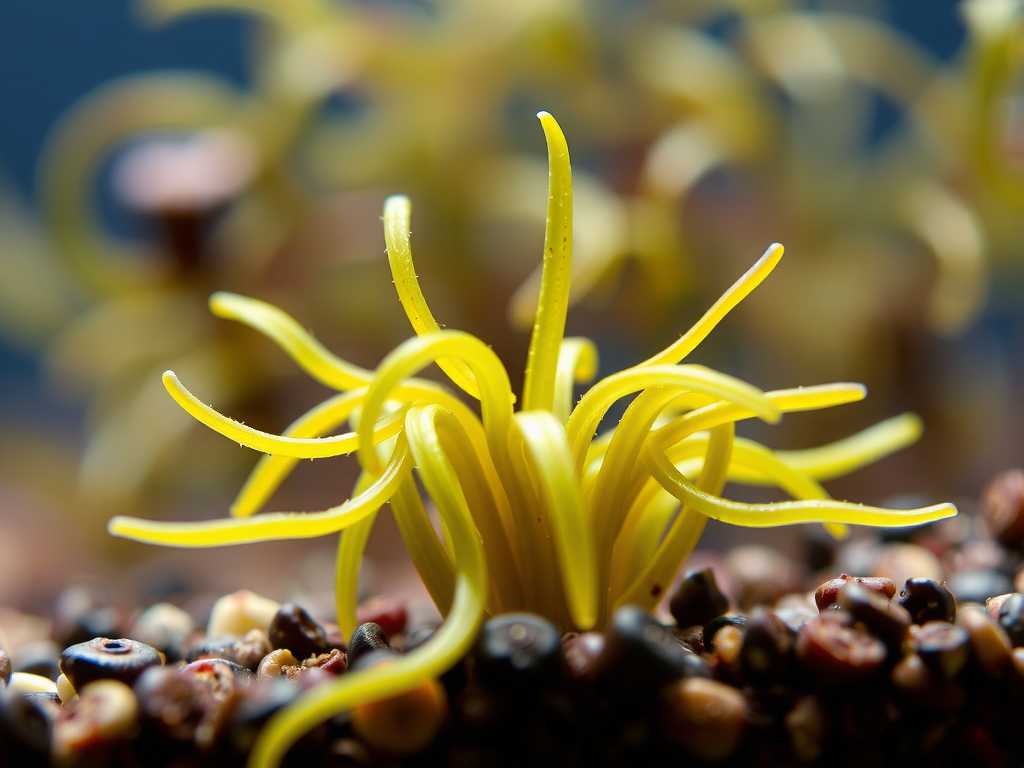
Before we dive into the how, we must understand the why. Terrestrial bladderworts (primarily from the Utricularia genus, like the popular U. sandersonii or U. livida) don’t have roots in the traditional sense. They possess a network of stolons that run along or just beneath the soil surface. Embedded in these stolons are the famous “bladders” or utricles. These are tiny, hollow traps with a door that seals shut. The plant pumps water out of these bladders, creating a vacuum inside.
When a microscopic organism—like a rotifer, cyclops, or tiny nematode—brushes against trigger hairs, the door flies open, the prey is sucked in with a rush of water, and the door slams shut, all in milliseconds. This is their sole method of obtaining the nitrogen and other nutrients missing from their preferred lean, waterlogged soils. So, feeding terrestrial bladderwort isn’t about gross chunks of food; it’s about providing the right-sized prey to trigger this incredible mechanism.
My Two-Week Feeding Experiment: From Skepticism to Success
I decided to conduct a focused, two-week observation on a pot of Utricularia sandersonii that had been stable but not particularly vigorous. My goal was to document the effects of a consistent, appropriate feeding regimen.
Week 1: Setting the Stage and Initial Feeding I prepared my “food”: live microworms (Panagrellus redivivus), a common live food for fish fry, readily available from aquarium hobbyist sources. They are the perfect size, roughly 1-2 mm, and actively wriggle, which is key for triggering the traps. Using a pipette, I carefully placed a small drop of the worm culture (in its watery medium) directly onto the mossy mat of the plant, focusing on areas where I knew the stolons were active. I did this twice during the first week.
- The Initial “Pitfall” I Encountered: My first mistake was over-enthusiasm. I applied too much of the watery culture, leaving the surface soggy for too long. While terrestrial bladderworts love consistent moisture, they are not aquatic and can suffer if the crown stays waterlogged. I noticed a slight yellowing in one small area.
- My Solution: I immediately adjusted my technique. I used a finer pipette to apply fewer drops and gently fanned the surface for a minute to encourage evaporation of excess surface water. This small fix prevented any rot from setting in.
Week 2: Observation and Visible Transformation By the start of the second week, I was looking for changes under a 10x magnifying loupe. The real magic happened between days 10 and 14. I began to notice a distinct difference. The fed section of the plant exhibited a noticeably deeper, healthier green color compared to an unfed section I was maintaining as a control. More strikingly, the growth rate accelerated. New stolons began to branch out more frequently, and I observed a significant increase in flower bud formation. The unfed section remained pale green and grew at its previous, slower pace. This visual proof was undeniable—targeted feeding for healthy terrestrial bladderwort directly stimulated lush growth and reproductive energy.
Your Step-by-Step Guide to Properly Feeding Your Plant
Based on my experience and the consensus from authoritative societies like the International Carnivorous Plant Society (ICPS) and expert cultivators, here is a clear, safe method.
1. Sourcing the Right Food Your best options are live, microscopic organisms:
- Microworms (Panagrellus redivivus): My top recommendation. Easy to culture at home in a container of oatmeal.
- Vinegar Eels (Turbatrix aceti): Another excellent, easy-to-culture option.
- Daphnia or Cyclops (Newly Hatched): These can be harvested from established freshwater aquariums or purchased as eggs.
- Key Takeaway: Live food is non-negotiable. The movement is what triggers the traps. Dead food will rot and harm the plant.
2. The Safe Application Technique
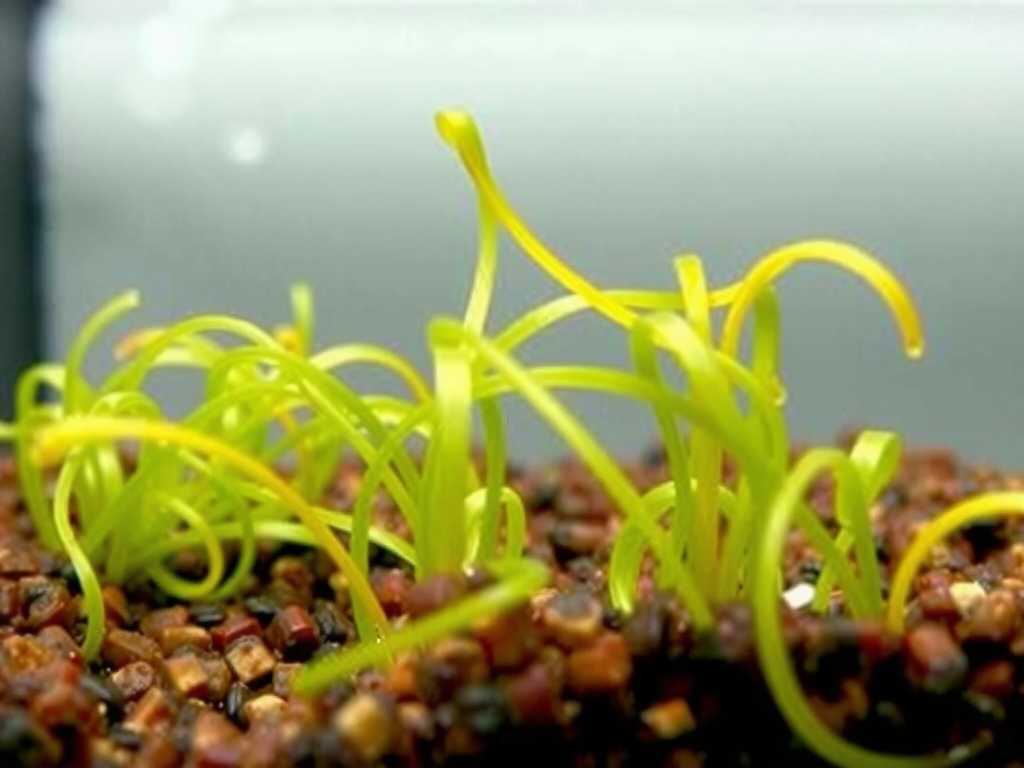
- Tools: A small pipette or syringe (without a needle).
- Process: Draw up a small amount of the water containing your live food. Gently apply tiny droplets directly to the plant’s substrate surface, near the growing tips. Imagine you are dew falling, not pouring a drink.
- Frequency: For promoting lush bladderwort growth, a light feeding once every 7-10 days during the active growing season (spring through fall) is sufficient. In winter, feeding can be reduced or stopped as growth slows.
3. The Ideal Growing Environment: More Than Just Food Feeding works best when the plant’s core needs are met. The Royal Horticultural Society (RHS) advises that these plants thrive in a specific setup:
- Soil: A nutrient-free mix of roughly 50% sphagnum peat moss and 50% perlite or silica sand.
- Water: Always use distilled, reverse osmosis, or rainwater. Tap water minerals will kill them. Keep the pot sitting in a shallow saucer of this pure water (about 0.5 inches) at all times—the “tray method.”
- Light: Bright, indirect light or artificial grow lights for 12-14 hours a day. Strong light encourages robust growth and flowering.
- Humidity: Moderate to high humidity is preferred, achieved by grouping plants or using a humidity tray.
Common Questions from Fellow Growers
Can I use fish food or powdered food instead? I strongly advise against it. These foods are too large and will not be consumed. They will instead decompose on the moist surface, leading to mold, fungal outbreaks, and algae growth that can smother and kill your delicate bladderwort. Stick to live, microscopic prey.
How do I know if my bladderwort is hungry or just unhealthy? A “hungry” terrestrial bladderwort often shows stunted, pale, or yellowish growth and a reluctance to spread or flower. However, these symptoms can also indicate poor water (mineral toxicity), insufficient light, or incorrect soil. Always rule out these environmental factors first. If all conditions are perfect and growth is still poor, then a lack of prey in its environment is the likely culprit.
My plant seems to be growing well without any active feeding from me. Is that possible? Absolutely! If your plant is kept in a greenhouse, a terrarium, or even outdoors in a suitable climate, the natural ecosystem will provide. Fungus gnats, springtails, and other tiny soil fauna will naturally find their way into the pot and become prey. Your active feeding simply supplements this in a controlled indoor environment to ensure optimal bladderwort nutrition.
Watching my terrestrial bladderwort transform over those two weeks was a profound lesson in meeting a plant’s specific needs. It’s not about force-feeding but about facilitating its natural, extraordinary process. By providing the correct live food in a careful manner, while meticulously maintaining its soil, water, and light requirements, you unlock its potential for dense, vibrant mats and delightful little blooms. The key is patience, observation, and a culture of microworms on your shelf. Start with a light hand, observe how your plant responds, and you’ll soon be rewarded with a captivating display of lush, healthy growth.

发表评论